
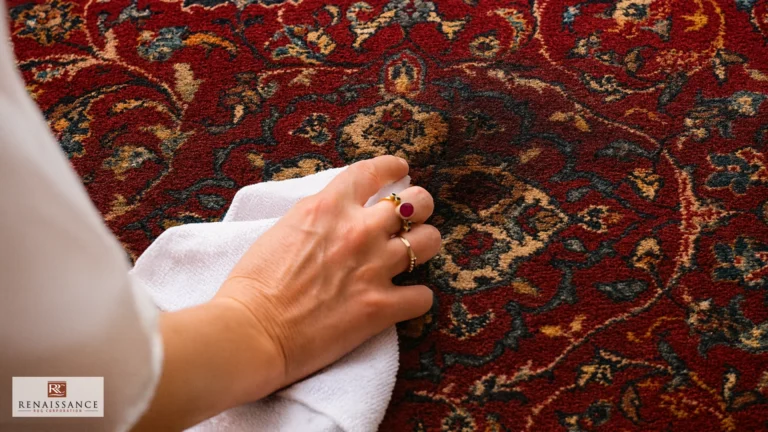
Spills happen, tomato sauce at midnight, coffee before the first email, red wine right when guests laugh the hardest. This guide keeps things friendly and practical. You’ll see quick moves for fresh messes, clear tool lists, and safe methods for wool, silk, cotton, synthetics, and naturals. We’ll talk pet accidents, wine and coffee, plus how to make any favorite piece behave more like a stain-resistant rug. You’ll also learn how to get stains out of rugs without stressing the fibers, when a spot fix is enough, and when a deeper reset is smarter. Let’s get to it.
How to get stains out of rugs: essential supplies and prep
Before the first blot, get the order right: act fast, keep tools simple, and test in a corner so colors stay true. These three habits support everything that follows.
Immediate steps for fresh spills (blot, don’t rub)
Speed matters. If you’re asking how to get stains out of rugs, place a white cloth over the spill and press to lift moisture. Rotate to a dry area and repeat, working from the outer edge in, so the spot doesn’t travel. If the spill is thick, scoop with a dull spoon first, then return to blotting. When the stain is stubborn or has an odor, our early recommendation is to lean on a professional Rug Stain Removal Service, which keeps damage from setting and saves time.
Tools you need before you start (sprays, cloths, bowls)
Build a small kit for everyday rug cleaning: white cotton cloths, paper towels, a soft brush, a dull spoon, two bowls, cool water, clear mild dish soap, white vinegar, and a labeled spray bottle for “rinse.” White cloths show progress, stop dye transfer, and make it easy to see when you’re lifting color versus soil. Keep the kit in a handy spot so spill response feels automatic.
Spot-testing to protect delicate fibers
Two-minute habit, big payoff. Damp a hidden corner, add a tiny bit of cleaner, wait one minute, then blot. If color shows on the cloth or the texture changes, switch to plain water and shorter cycles. This quick step protects fibers, supports safe rug cleaning, and keeps how to get stains out of rugs simple instead of stressful.
Pet, red wine, and coffee stains: targeted fixes that work
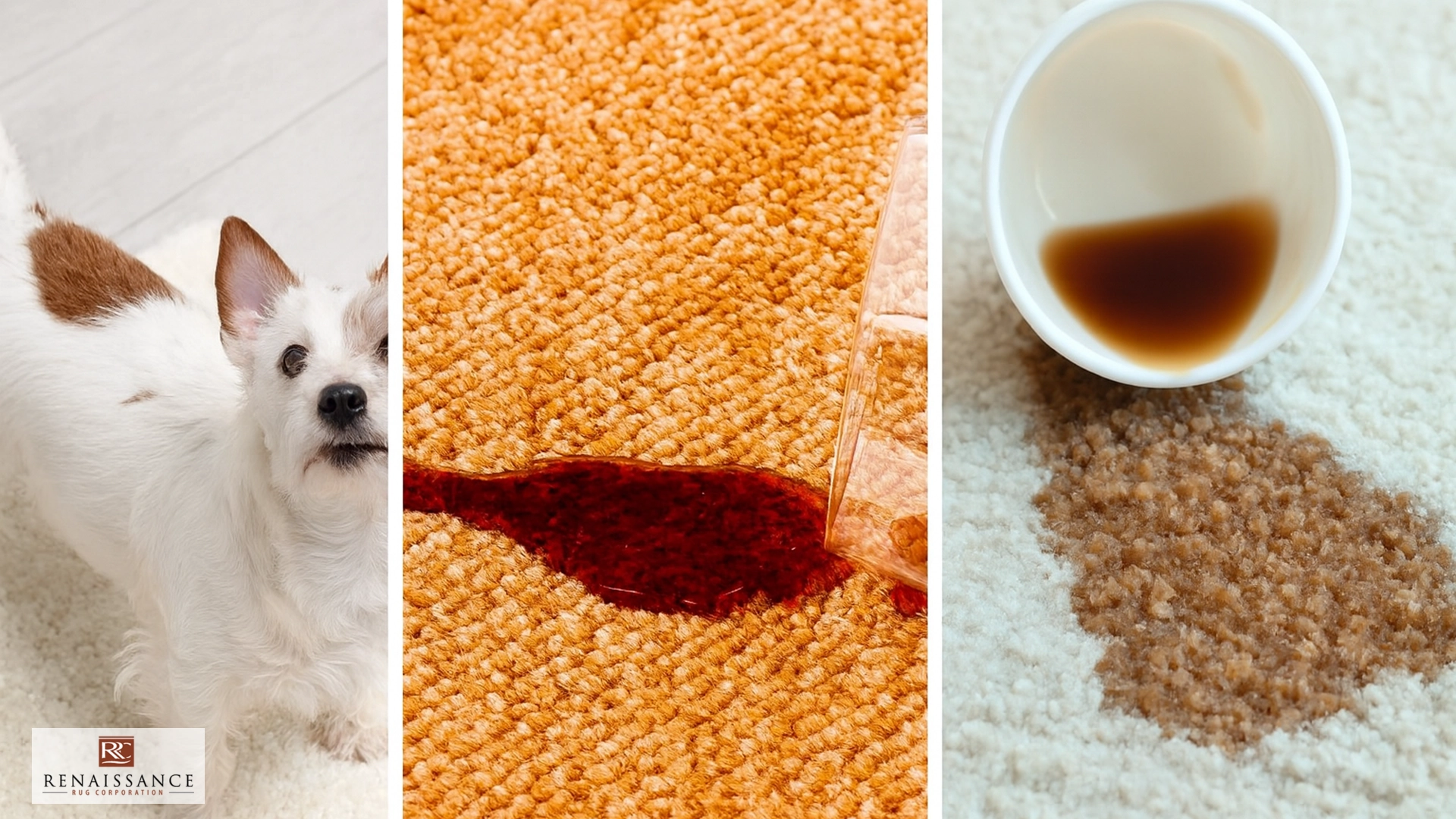
Three frequent flyers, three tight plans. Pet accidents need surface cleanup and odor control. Red wine is tannin-heavy. Coffee adds sugars and sometimes dairy. The steps below prioritize lift, rinse, dry—light, repeatable cycles that don’t grind the pile.
Pet accidents without lingering odor
Scoop solids with a spoon. Blot liquids hard with white towels. Mist a 1:1 mix of white vinegar and cool water, blot again, then follow with a few drops of mild soap in a cup of water. Rinse by misting plain water and blot dry. If dyes start to move, stop and air-dry. This measured rhythm keeps how to get stains out of rugs realistic in busy rooms and friendly to pets.
Red wine and coffee stain removal, step-by-step
Blot first, always. For wine, a light sprinkle of salt can pull moisture; lift and discard. Add a few drops of mild soap to water, blot, then rinse and blot again. For coffee, do the same but add an extra rinse cycle so sugars don’t hang around. These short cycles make getting stains out of rugs feel manageable instead of messy.
Fiber-specific methods: wool, silk, cotton, synthetic, and natural
Different fibers, different limits. Protein fibers (wool, silk) want gentle hands and cool water. Cotton and polyester are flexible. Plant-based naturals like jute and sisal prefer low moisture. Use the material as your map.
Wool and silk: gentle solutions that won’t damage the pile
So, how to get stains out of rugs, treat wool and silk with cool water and a mild soap mix. Work small, blot in short passes, and avoid dragging across the grain. Lift thick spills with a spoon first, then return to blotting. If you discover a snag or fragile fringe, pause and consider a professional Rug Repair Service before it worsens. When dyes or age are uncertain, a quick Rug Appraisal Service helps you choose the safest route.
Cotton and polyester: durable rug cleaning steps
Cotton and polyester handle careful agitation. Start with blotting, then a mild soap solution and a soft brush that follows the weave. Apply, blot, rinse, blot—short, repeatable cycles. This is where rug cleaning feels straightforward: the fibers release soil more easily, and a single well-managed session is usually enough. Finish by grooming the pile in one direction and drying with good airflow.
Jute, sisal, and other naturals: low-moisture tactics
Plant-based fibers brown if they stay wet. Use the least liquid possible: mist cleaner onto a cloth, touch the spot, then blot with a dry towel. Slip a barrier under the area so moisture doesn’t wick to the floor. Keep cycles short; stop on time. Low-moisture habits protect texture and color while still delivering visible progress.
Deep rug cleaning vs spot treatment: choosing the right approach
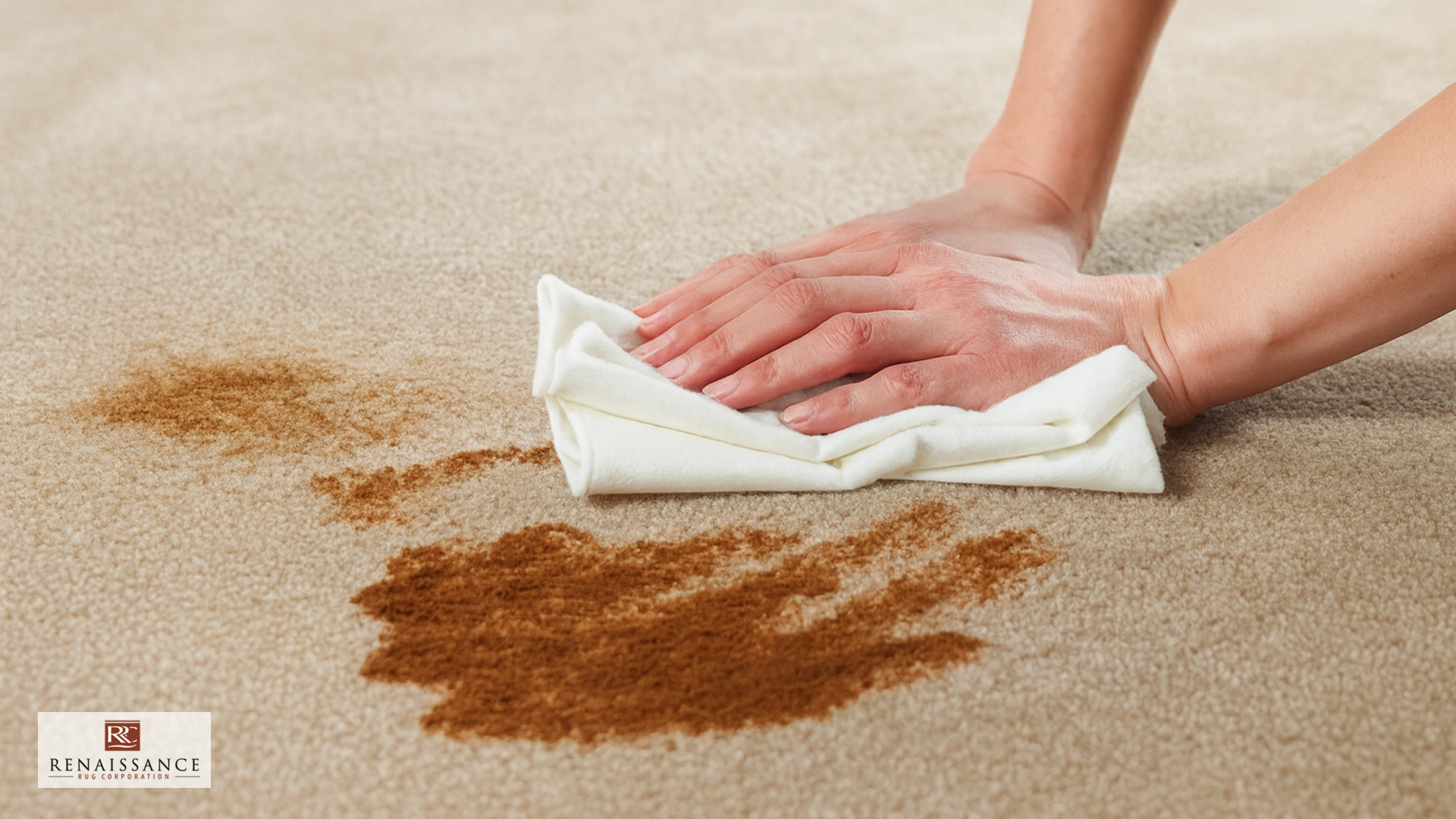
The rule of thumb: palm-size and fresh = spot treatment; recurring marks, dull lanes, or lingering odor = time for a deeper reset. Keep expectations steady, and don’t rush drying.
When a quick spot clean is enough
If blotting lifts most color and the area dries without a halo, call it done. A single apply–blot–rinse–blot cycle is kinder to fibers than marathon scrubbing. Gentle airflow helps the pile stand tall again. Simple wins are part of how to get stains out of rugs, and they add up.
Signs you need full rug cleaning (and how to do it safely)
If traffic lanes look gray, spots reappear, or odors come back after drying, that’s deeper soil. A controlled bath or professional wash may be smarter than repeated scrubbing. Use Rug Cleaning Service for pieces that need structured care; full-process rug cleaning resets the face yarns and backing without rough handling.
Prevent stains before they happen: turn any piece into a stain-resistant rug
Prevention feels like quiet magic. A good protector buys you time to blot. Steady habits cut down on surprise marks. Pads keep spills from sinking into floors. Together, these moves make everyday living feel closer to a stain-resistant rug experience.
Protectors and sealants that actually help
Applied lightly, a protector doesn’t change the hand of the textile but gives you a grace period to respond. Reapply after a heavy spill or a season of guests. In dining zones and kid corners, that extra buffer makes a difference, helping the piece behave more like a stain-resistant rug when life gets lively.
Smart daily habits for high-traffic areas
Shoes by the door, a small walk-off mat, quick crumb sweeps, and quarterly rotation keep wear even. Host mode? Stage coasters and napkins before the first pour.
Best pads and barriers to reduce soak-through
Use a quality pad to cushion and block moisture from reaching the floor. On hard surfaces, a felt-and-rubber combo helps with comfort and safety. Under dining tables, a clear mat under kid seats prevents surprise spots. For a perfect fit that supports a stain-resistant rug feel day to day, our Rug Padding Service keeps the layer under your rug working as hard as the piece on top.
Common mistakes to avoid during rug cleaning
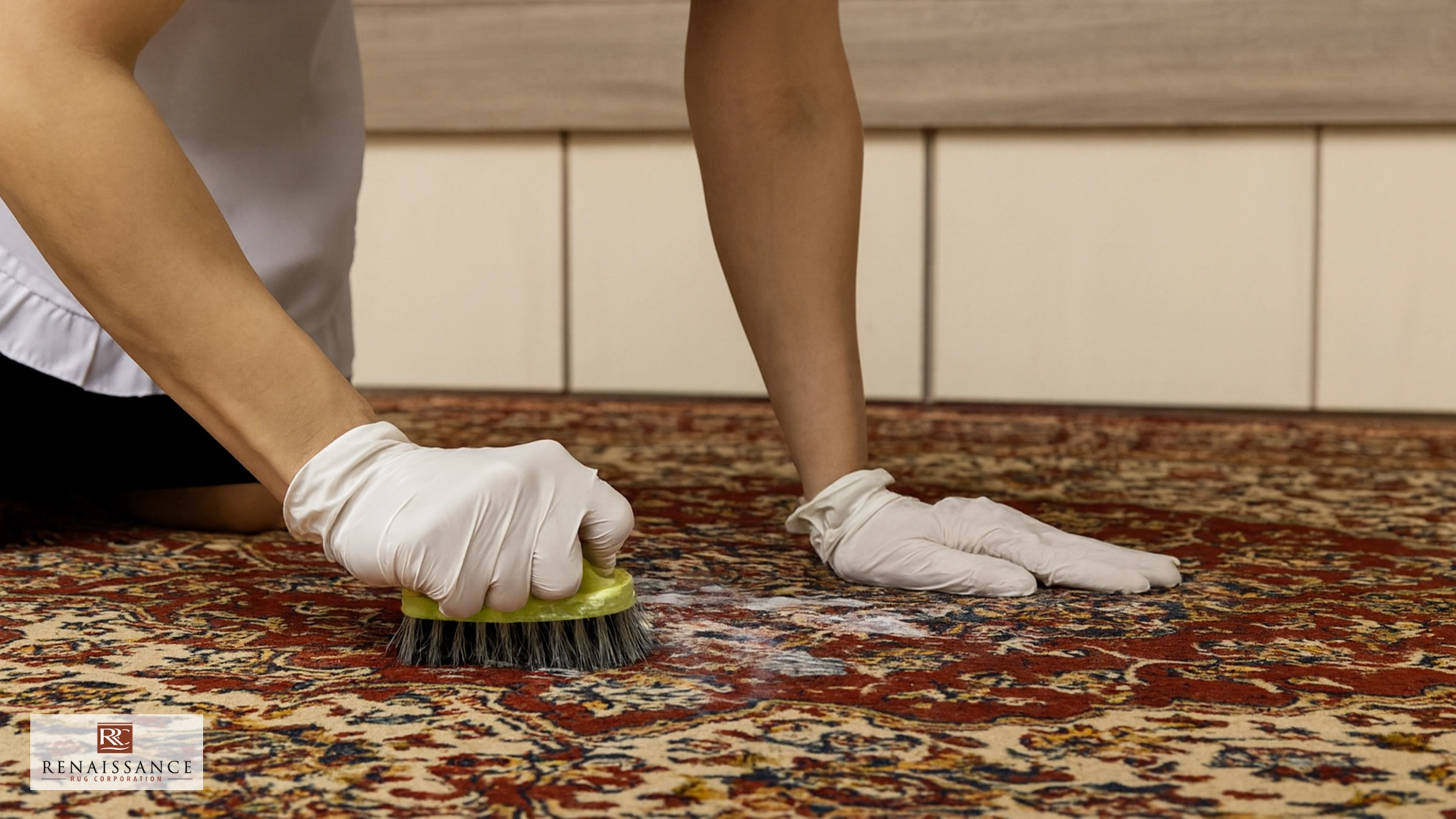
Most damage comes from three things: strong chemicals, too much water, and heat. The fix is simple—gentle products, short cycles, and cool air.
Harsh products, over-wetting, and heat damage
Skip harsh bleaches and high-alkaline mixes that strip color and stress fibers. Over-wetting drives soil deeper and slows drying, which can cause browning. Heat sets many stains, so stick to cool water and fans. Even a stain-resistant rug loses its advantage if you bake a spill into the pile.
Scrubbing vs blotting: a technique that saves fibers
Think lift, don’t grind. Scrubbing sideways fuzzes tips and spreads color. Use a dull spoon for thick spills (yogurt, salsa), then return to press-and-lift blotting. Short, gentle repeats lead to cleaner results and a healthier pile. Another reason for how to get stains out of rugs is about rhythm, not force.
FAQ
Short, honest answers to the things people reach for first. No fluff, just what actually helps.
Can I use baking soda and vinegar on every rug type?
They’re handy, but not universal. Baking soda can leave a light residue if you go heavy. Vinegar is fine in small, diluted amounts, but can disturb dyes on sensitive fibers. For wool and silk, keep solutions weak and cycles short. Always spot-test a corner and stick with light blotting and cool water before anything else.
How often should I schedule professional rug cleaning?
Traffic, pets, and location decide it. Busy living rooms in Seattle may want annual or 18-month cycles; bedrooms can go longer. If the face yarns look dull even after vacuuming, lanes won’t lift, or odors return after drying, a full rug cleaning resets the piece better than repeated spot work.
What’s the safest way to clean an antique or Persian rug?
Keep moisture low, use cool water, and avoid strong chemicals. Work in very small sections with short apply–blot–rinse–blot cycles. Suppose colors move during a spot test, pause, and air-dry. For older dyes or fragile fringe, gentle handling matters most—and a calm, patient pace keeps details safe while you lift the mark.
