
Buying a rug should feel simple, yet it’s where rooms get made, or muddled. After three decades helping people pick and place rugs, I’ve seen the same traps repeat. This guide cuts through the noise with clear numbers, fast examples, and friendly notes you can actually use today. We’ll talk living room layouts, bedroom borders, dining chair clearance, entry safety, and small-space tricks. You’ll get a practical rug size guide, plus a rug layout guide you can test with tape before buying. At Renaissance rug, we keep it real: the right rug sizes make a room feel finished.
Living Room Rug Sizes: What Fits and What Fails
Start big-picture, then dial in spacing around sofas, coffee tables, and sectionals. This rug size guide calls out common rug size mistakes and shows how a simple rug layout guide keeps furniture grounded.
Sofa + coffee table spacing (rug layout guide)
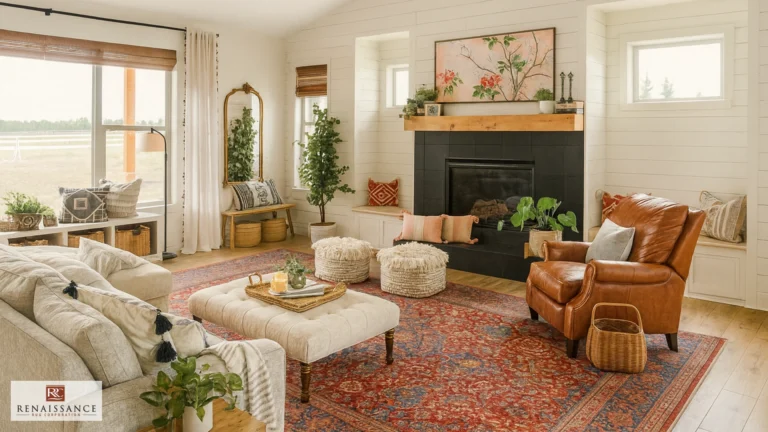
For most three-seat sofas, rug sizes around 8×10 or 9×12 anchor the scene. Aim for the front sofa legs on the rug and at least 8–12 inches of visible floor at the perimeter. Keep the coffee table fully on the rug so it doesn’t float. Tape the footprint using your rug layout guide and walk the route you use most. Smooth turns without toe hits mean the size works.
Ideal rug sizes for sectionals
Sectionals like generous rug sizes. Let the rug extend past the chaise so the coffee table and ottoman sit cleanly. A 9×12 or 10×14 often fits; long rooms may prefer 8×10 rotated. If the rug stops at the inner corner of the sectional, the seating reads chopped. Slide the layout with your rug layout guide until every seat feels connected.
Common rug size mistakes in living rooms
Number one: buying small. Number two: letting the coffee table sit on the bare floor. Number three: crowding walkways. These common rug size mistakes lead to edge wear and wobbly corners. If you already see curling or wear on borders, our Rug Repair Service can bring life back. Going up one step in rug sizes usually solves all three issues.
Bedroom Rug Size Guide for Every Bed
Bedrooms deserve soft landings and easy paths. This rug size guide covers queen, king, and twin setups, then shows a simple approach with runners when full rugs feel tight.
Rug sizes for queen, king, and twin
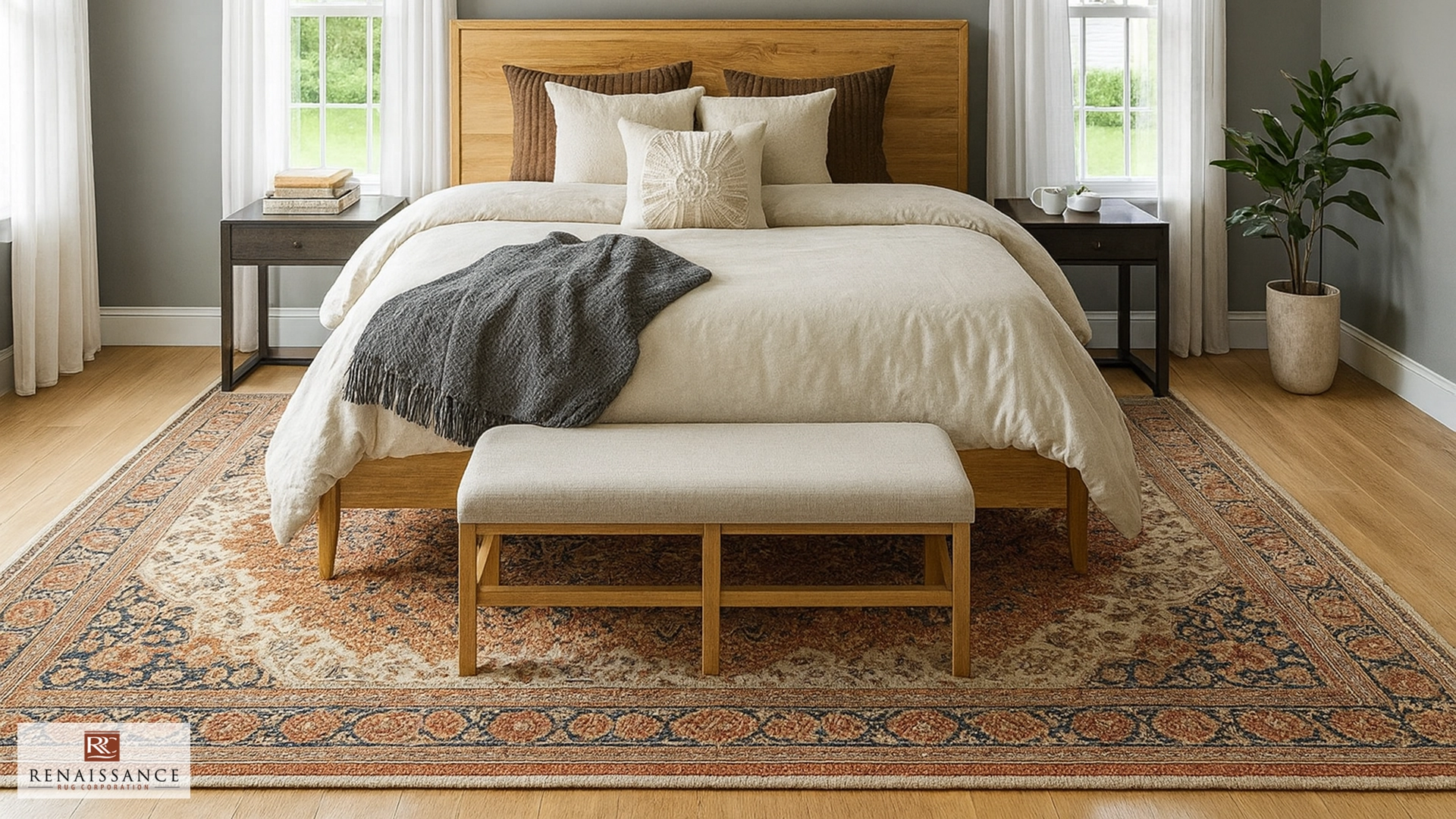
A queen bed loves 8×10 among common rug sizes, giving you plush edges along both sides and the foot. Kings usually want 9×12 for balanced borders. Twins can pair with a 5×8 or a smart runner combo. Slide the rug slightly forward so nightstands land off the rug; it keeps cords and drawers clean. Keep the same logic in your rug layout guide sketches.
Runner placement on both sides of the bed
Runners add comfort without the bulk. Place one on each side, about 20–24 inches from the wall, leaving a neat reveal around the bed frame. Keep runner ends short of the nightstand line so edges don’t curl under table legs. This move fits small rooms that can’t take bigger rug sizes, and it plays nicely with a taped rug layout guide on the floor.
Dining Room Rug Sizes: Chairs, Clearance, and Comfort
Dining rooms live or die by chair movement. This section shows minimum rug sizes by table shape, the biggest common rug size mistakes, and a rug layout guide for leaves and extensions.
Minimum rug sizes by table shape
Add roughly 24 inches beyond the tabletop on every side so chairs slide without catching. For a 36×72 rectangle, look at 8×10 among common rug sizes. Round tables often want a round rug; if your table is 48 inches across, think 8 feet round. When you draft with your rug layout guide, pull out a chair and trace the arc to be sure wheels glide.
Common rug size mistakes at the dining table
Too little chair clearance causes snags and wobbles. Thin pads or curled corners don’t help either. These common rug size mistakes go away with a larger footprint and a proper pad. Food and chair lines mark up rugs over time; our Rug Cleaning Service keeps fibers fresh and ready for guests. Choose rug sizes that let chairs move freely.
Rug layout guide for extendable tables
If your table expands, plan for the longest version. Tape the extension, pull chairs all the way back, and mark the swing. Your rug layout guide should show clean glide paths with room to spare. Most families land on 9×12 among rug sizes once the leaf is inserted. That size handles gatherings without scraping borders.
Entryway & Hallway Rug Sizes That Welcome, Not Trip
Entries and halls are busy lanes. This part handles runner lengths, safe reveals, and door swing realities, plus a cleanup plan for paw prints and rainy days.
Best rug sizes for hallway runners
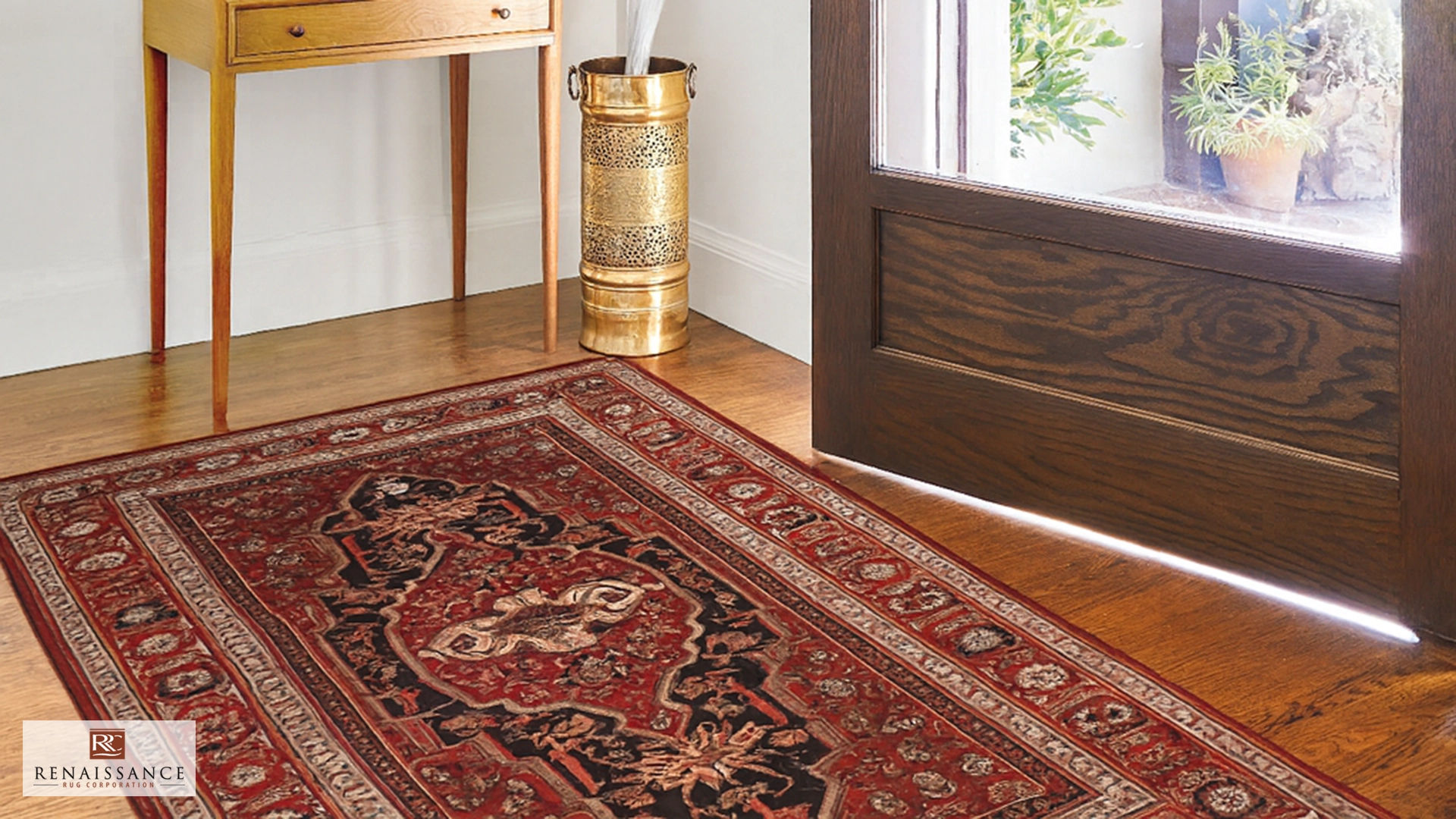
Measure the usable length, then leave 4–6 inches of floor along both sides as a clean border. Standard runner rug sizes like 2.5×8 or 3×10 work for most halls. Keep ends short of doorways to avoid edge folds. If puddles or paw prints happen often, our Rug Pet Stain Removal Service helps the material bounce back.
Door clearance and safety: common rug size mistakes
Doors need space to swing without rubbing. The biggest common rug size mistakes here are thick stacks at the threshold and corners that lift. A quality pad with the right profile stops slipping and keeps edges low. If door scuffs already show, light cleaning helps the surface relax between fibers.
Studio & Small-Space Rug Size Guide
Compact rooms need clever choices. This rug size guide groups furniture, opens walking paths, and uses color breaks to add depth without clutter.
Zoning with rugs: rug layout guide for tight spaces
Use one rug to hold the sofa and chair set, and a separate runner to lead from the entry to the kitchen. That split reads like two rooms while keeping things calm. Your rug layout guide confirms traffic lines and leaves a small, even reveal. Slightly larger rug sizes often make small spaces breathe.
Rug sizes that make rooms look bigger
Aim for a rug that tucks under the front legs of the main seating and reaches under the side tables. Tiny scatter pieces chop the view. In narrow studios, rotate 8×10 among rug sizes so the long side follows the longest wall. The extra width at the edges reads expansive and brings the eye through.
Avoiding common rug size mistakes in small rooms
Going tiny, stacking rugs at doors, and leaving islands under coffee tables all count as common rug size mistakes. Choose a single anchor rug, use a flat-profile pad, and keep edges simple.
Measuring Made Easy: How to Choose Rug Sizes the First Time
This part turns numbers into a plan: a fast checklist by room plus a tape trick that doubles as your rug layout guide. We also touch value decisions where size matters.
Room-by-room measuring checklist (rug size guide)
Living room: front legs on, 8–12 inch border. Dining: table size plus 24 inches on every side. Bedroom: 8×10 for queen, 9×12 for king, or paired runners. Entry and halls: leave 4–6 inches along the sides. Keep notes inside your rug size guide and match them to store tags. If value is a factor later, our Rug Appraisal Service explains how size and proportion affect resale.
Printable tape layout: a quick rug layout guide
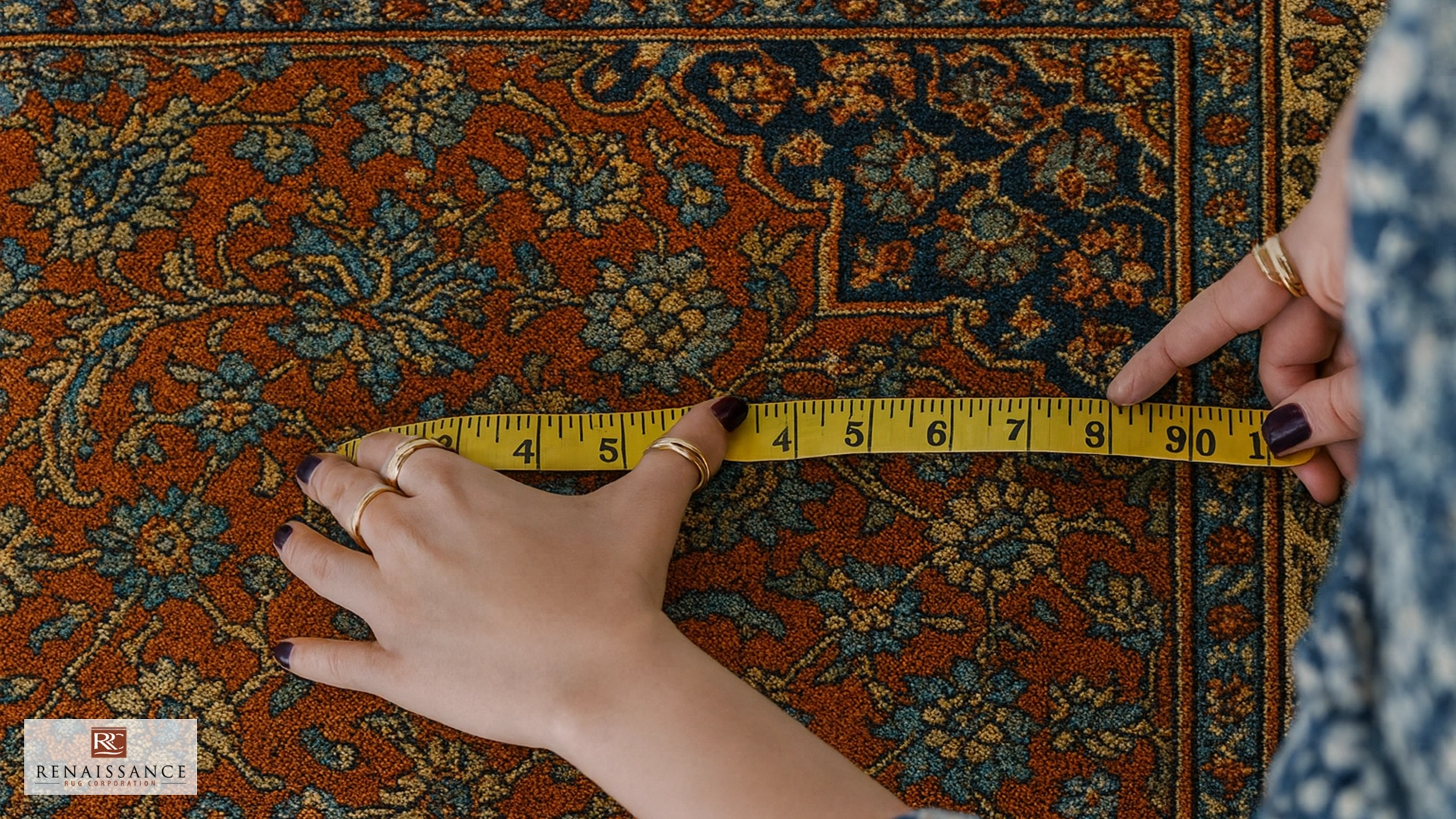
Blue painter’s tape is your best friend. Outline candidate rug sizes, drop in the coffee table, pull dining chairs, and walk the paths you use each day. If everything moves without scraping corners, you have found the sweet spot. Add a pad with the grip and height you need; our Rug Padding Service helps with the right profile. For heirlooms, our second Rug Appraisal Service note covers insurance records.
FAQ
What are the standard rug sizes for living rooms, bedrooms, and dining rooms?
Common rug sizes include 5×8, 6×9, 8×10, 9×12, and 10×14. Living rooms often land on 8×10 or 9×12. Bedrooms scale by bed width: queen likes 8×10, king usually wants 9×12. Dining rooms need a table size plus 24 inches per side so chairs glide without catching. When in doubt, follow your rug size guide.
Is a 5×8 too small for my living room layout?
For most three-seat sofas, yes. A 5×8 often leaves the coffee table floating and breaks the seating group. Step up within common rug sizes to 8×10 so front legs land on the rug and paths feel smooth. If you own a 5×8 already, layer it under a side chair or reading nook, or ask about safe cleaning for a fresh look.
How do I use a rug layout guide to test sizes before buying?
Tape the full footprint, place furniture exactly where it lives, and walk every route, sofa to kitchen, desk to door, table to cabinet. Your rug layout guide should create easy moves with no corner scrapes. If you already bought and the fit feels off, we can help with gentle reshaping and refreshes, plus advice for future rug sizes.
